How to Braid: The Ultimate Overhand vs. Underhand Braids Tutorial

When it comes to learning how to braid, many people ask me about the difference between braiding overhand and braiding underhand. This is because, when we’re creating a particular braided hairstyle, small changes in how you hold your hands may make a massive difference in how long it takes you to create the hairstyle and how comfortable the client is. This is true despite the final result’s looks, which can be great with both methods.
If you've ever tried to copy a braiding tutorial only to end up with tired hands and stiff shoulders, you likely ran into the classic matchup: Overhand vs. Underhand braiding. Don’t worry! In this guide, we’ll break down the mechanics and explain the advantages of my method, which has put Sunny Braids as the top braiding studio in Puerto Rico.
By learning how to braid with our system, you, too, can end up in the top 10% of earners in this industry.
Understanding The Main Difference: Hand Placement
Mastering the mechanical difference between overhand and underhand braiding is the exact moment you move from "someone who can do hair" to a true braiding artist. And you know what? While both techniques can create great results, I have a favorite one that I teach to every apprentice when they sign up for my braiding courses. Keep reading, and soon I’ll tell you which one I chose, and most importantly, why I chose it.
To begin with, what’s the basic difference between overhand braiding and underhand braiding? What sets these two braiding methods apart? The core distinction between them comes down to where your hands sit relative to the hair strand you are moving. Check out this video and see it for yourself!
Underhand Braiding: With this method, your hands go below the hair.
Overhand Braiding: With the overhand method, your hands stay above the hair.
Is It Nature or Practice?
In a previous article, we talked about whether braiding is a skill or a natural talent. This also applies to these two braiding methods. I am naturally an overhand braider. And it’s not just me! Everyone has a natural preference. Some people naturally gravitate toward an overhand grip, while others find the underhand scoop more comfortable.
There are many different ways to braid; each braider adopts their own technique according to what someone taught them, or by looking at a tutorial if they’re self-taught. I believe it’s a matter of habit, not necessarily a natural talent. According to your personal approach, you’ll have a preferred method. In any case, with practice, you can switch from an underhand braiding technique to the method I find more convenient, which is overhand braiding.
The Problem With Slow Braiding
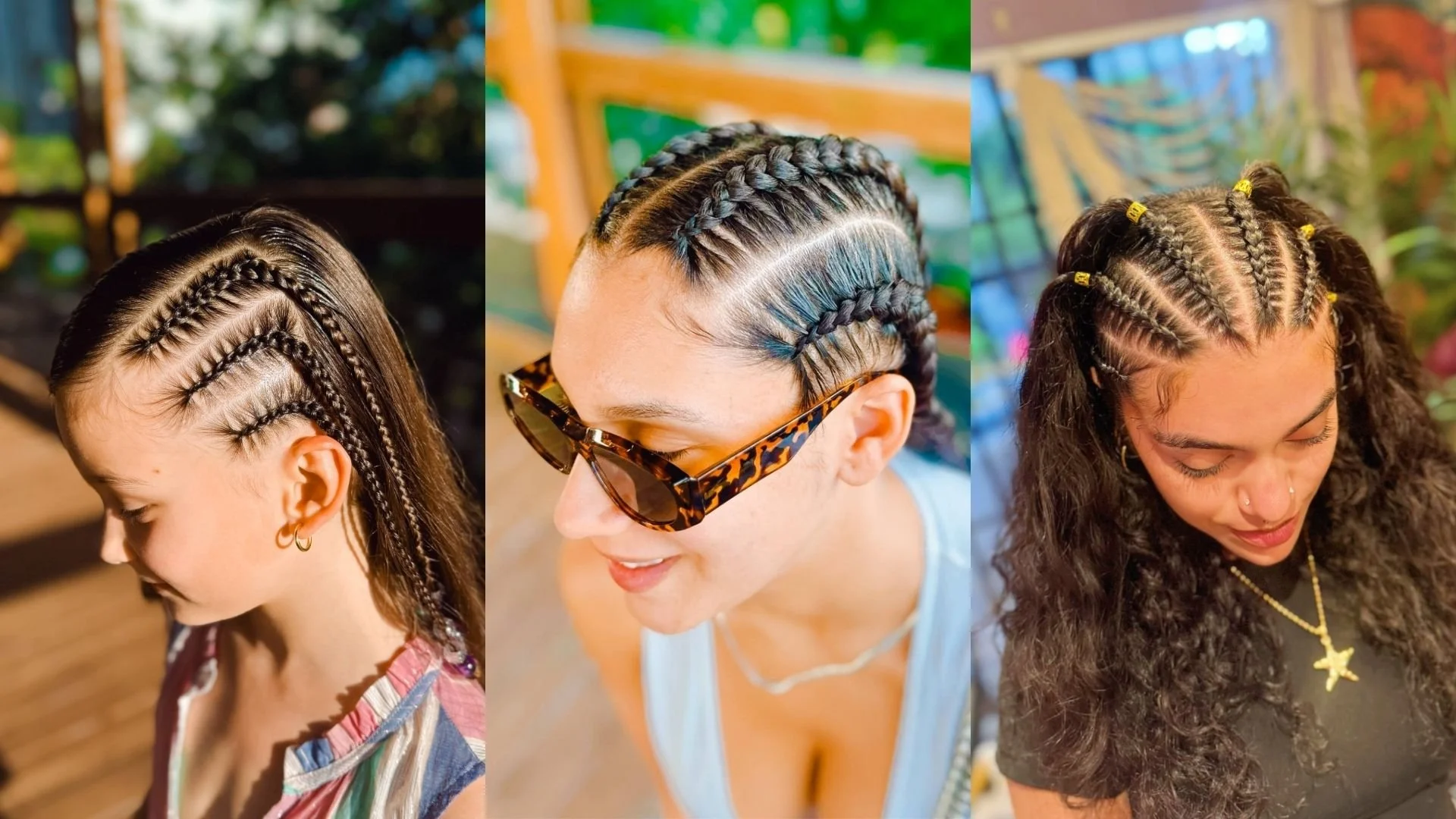
Guess what? If I showed you pics of beautiful braided hairstyles created by some of our braiders in SUNNY BRAIDS, I bet you wouldn’t tell the difference between those that were braided overhand and those underhand. This is because the braiding technique has nothing to do with the style or how the braid looks. A braider can implement different techniques to achieve the same results, such as cornrows or box braids.That said, I’ve known plenty of braiders who achieve fantastic results when they braid, but the problem is that they do it too slowly because their hands are in the wrong position. At least, I consider that this is a flaw of their technique because, when you are a professional braider working in a studio, you are supposed to complete each hairstyle in its estimated time. Sure, some styles like small box braids take long hours, but still, you must stick to a timeline. Otherwise, not only are you wasting your client’s time, but you’ll also lose money if you can’t fulfill all your appointments!In a few words, if you only braid your own hair (or a friend’s) when you’re at home or on vacation, there’s no inconvenience in taking it slow or having as many breaks as you need to rest your hands. But this doesn’t apply if you are braiding for a living! You need a technique that guarantees these three keys:It’s FAST: You complete the hairstyle in the estimated time.It’s COMFORTABLE: Your hands don’t hurt, and you can braid for hours.It’s CONSISTENT: You implement the same technique no matter the hairstyle, and with or without extensions. You need to stick to a technique that feels natural.
Why Opt for the Overhand Braiding Method
The method I teach in my braiding courses is the overhand braiding method. This is the method I use for braiding, and therefore, the one that I pass on to the people who want to learn from me. So, why am I such a big fan of the overhand instead of the underhand? Simply put, it’s super comfortable, it’s fast, and once you learn it, it’s easy to master it and get used to it.
Even if you’ve attempted underhand braiding, although you may find overhand braiding a bit different at first, soon you’ll notice you braid way faster and your hands feel more comfortable. Let’s see in further detail what sets the two methods apart.
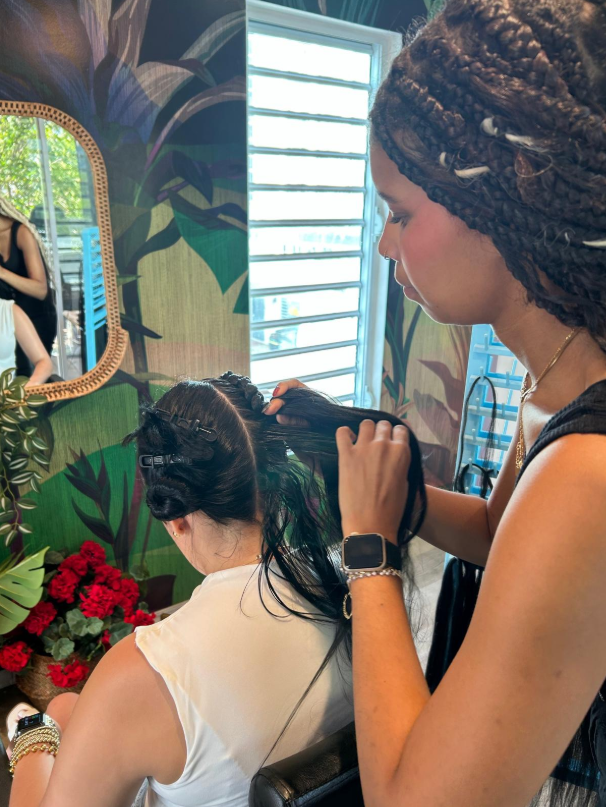
In the following picture, you can see one of our braiders using the overhand technique:
Overhand
Notice how her hands feel natural and comfortable. Her elbows remain close to her body, so she doesn’t need to lift her arms and tense her shoulders. Additionally, look at the client’s head: It’s perfectly straight, so the client doesn’t need to sacrifice their own comfort when getting braided.
Now, let’s compare this with the following picture:
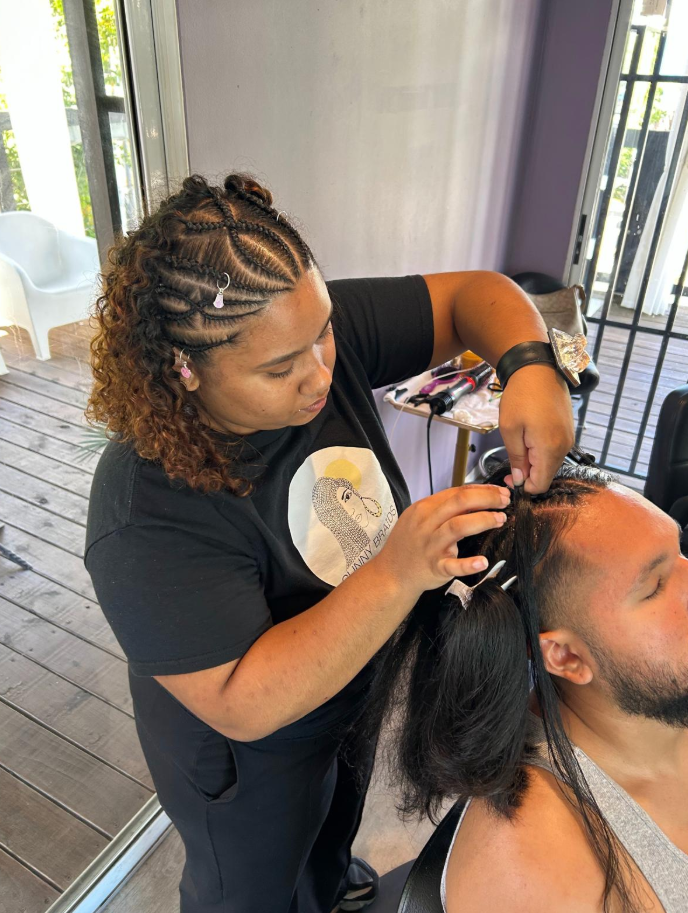
Underhand
I can’t help but notice how the braider lifts her elbows almost up to her shoulders, which necessarily causes some tension. She also needs to bend her wrists, which can cause hand fatigue. Additionally, the client’s head is pulled backwards so the braider can reach the top of his head in this position.
This doesn’t mean that the braids she creates don’t look stunning! The results turn up amazing both ways, but one braiding technique feels overall more natural than the other one, don’t you agree?
So, What If You Only Know How to Braid Underhand?
Okay, so far, I’ve explained to you why I chose the overhand method and why I teach it to beginner braiders. But what happens if you want to perfect your braiding skills and you are already an expert underhand braider?
Underhand braiding is a method I don’t recommend, but still accept. I’ve had braiders in Sunny Braids who came to work with us already mastering the underbraid technique. When they show up experienced and skillful, they braid fast enough, and they are used to the method, so they don’t suffer from hand fatigue, then I’m not going to correct them.
I’ve known braiders who were able to create fast, spotless braids by mastering the underhand method. As we have seen, in the end, both techniques can achieve professional, stunning results for box braids and other popular styles.
Still, I insist, this is not the method I teach to new braiders. If you are learning how to braid with me, I’ll make sure you adopt the overhand braiding method because of all its advantages, given that your hands, elbows, and wrists will feel more comfortable (and also the client’s neck!)
Final Words
Now you know the basics on how to braid overhand vs. underhand. The main difference between them is how you place your hands. However, your elbows and wrists will be affected too, as well as the client’s head. As a professional braider, you want to maximize speed, comfort, and consistency when it comes to your braiding method.
So now you know: If you’ve never attempted braiding before, or if you aren’t satisfied with how fast you currently braid, give overhand braiding a shot! Keep practicing the movements until your hands don't have to think about the position. As with any repetitive technique, the more you practice, the more natural it feels. Once your muscle memory locks in, speed and precision will follow naturally.
In Sunny Braids, we work every day not only to give our clients the best service, but also to empower new braiders who love this skill and want to master it. We want to help you learn how to braid with confidence, feeling great both about the process and the results you obtain. Whether you are thinking about launching your braiding business or you simply want to help your kids through their morning rush by braiding their hair, you too can learn with our unique training method.
Here’s the best news! We’re offering a FREE braiding webinar with simple techniques you can practice at home. It doesn’t matter if you’ve never braided before: You too can learn from zero thanks to our complete learning system based on 5 core actions. Before you know it, you’ll be able to create amazing cornrows, box braids, and other popular braided hairstyles, both for your friends and family and for your clientele if you want to be a professional braider.
So, what are you waiting for? Sign up for our webinar now! Join our free training sessions and get ready to upgrade your braiding skills!